Lawn diseases, especially fungal issues, are a real problem in North Georgia. Our local technicians use only professional, commercial-grade products that are proven to treat common lawn diseases in our area.
Lawn Disease Control Service in North Metro Atlanta
Fungus overgrowth and other diseases are a big problem on lawns in North Georgia. Thinning brown spots, unusual lawn withering, and death are signs that your lawn may suffer from a fungus problem. Fungal problems are usually the result of too much moisture in the environment, which is sometimes caused by poor drainage or a lack of sunlight. Problems can also be caused by drought, improper mowing height, and compacted soil.
All of our lawn technicians are thoroughly trained to be able to identify and treat any lawn fungus known to infect Georgia lawns.
Common fungus problems we regularly see in the north metro area include:
-
Brown patch
-
Large patch
-
Dollar spot
-
Fairy rings
-
Gray leaf spot
-
Lawn rust
-
Powdery mildew
-
Pythium blight
-
Pythium root
-
Red thread
-
Slime mold
-
Spring dead spot
-
Summer patch
How Our Lawn Disease Treatment Works
WinLAWN uses a variety of broad-spectrum and more selective fungicides to eradicate fungus problems.
Contact our office to request a quote. One of our service managers will contact you to discuss your situation, service options, and provide a quote.
Is it a Lawn Disease or a Grub Infestation?
Wondering why your once-full-green lawn is looking worse for wear? It could be a lawn disease or a grub infestation—both common culprits here in the greater North Metro Atlanta, GA area.
Here's how to tell the difference:
- Lawn Disease: Look for discolored patches, irregular patterns, or thin, wilting grass. Specific diseases may have unique symptoms, like the circular patches of brown patch or the white webbing of dollar spot.
- Grub Infestation: Notice spongy areas of your lawn that easily lift up? Grubs are small, white, C-shaped larvae that feed on grass roots, causing sections to die. You may also spot increased bird activity as they dig for these tasty treats.
Unsure? We Can Help!
Professional Grub Control in North Metro Atlanta
Diagnosing lawn problems can be tricky. Our expert team in North Metro Atlanta can provide a thorough lawn inspection to identify the issue and recommend the most effective treatment. Don't let lawn disease or grubs ruin your outdoor oasis.
Contact us today to schedule your lawn inspection and get your lawn back on track!
Can I mow my lawn after a fungus treatment?
We recommend waiting at least 24–48 hours after a liquid treatment before mowing. This ensures the grass blades have had enough time to absorb the fungicide. Always make sure your mower blades are sharp to avoid further stressing the recovering turf.
Do you need to be home when we service your property?
No, you don't need to adjust your schedule for us. We’ll service your lawn, leave a detailed digital report of what we did, and ensure your gate is locked before we head out. You’ll get a notification when the job is done so you can keep on with your day.
How do I know if I have a lawn disease or just a dry lawn?
Lawn diseases often present in distinct patterns—like circles, rings, or patches with a "smoke ring" border—and don't improve with extra watering. In fact, if it is a fungus, more water often makes it worse. A dry lawn usually browns uniformly and "bounces back" after a deep soak.
How fast does the lawn disease treatment work?
Our commercial-grade fungicides start working immediately to stop the spread of the disease. However, please note that fungicides are "curative" for the fungus, not "restorative" for the dead grass. You will see the fungus stop spreading within 7–10 days, but the damaged grass will need time to grow out or be repaired through aeration and seeding.
What is the best time of year to treat for lawn fungus in Georgia?
Fungus is a year-round threat in our area. Brown Patch is common in the humid summer, while Large Patch often strikes Zoysia and Bermuda in the cooler, wet months of spring and fall. We offer both preventative treatments (to stop fungus before it starts) and curative treatments (to kill active outbreaks).
What is the difference between a fungus and a grub infestation?
They look similar from a distance, but the "tug test" tells the truth. If you pull the brown grass and it lifts up easily like a piece of carpet (because the roots are eaten), you likely have grubs. If the grass stays anchored but the blades look spotted, slimy, or powdery, it’s likely a fungal disease.
Why is my lawn getting fungus even though I take care of it?
In North Georgia, our high humidity and warm nights are the "perfect storm" for fungus. Common triggers include:
- Overwatering or watering too late in the evening.
- Compacted soil that prevents proper drainage.
- Thatch buildup which traps moisture at the root level.
- Dull mower blades that tear the grass, leaving open "wounds" for spores to enter.
Will the fungus come back?
Fungal spores live naturally in the soil. While our treatments eradicate the active infection, the fungus can return if environmental conditions (like heavy rain or high humidity) persist. This is why we recommend a preventative program for lawns with a history of disease.
Looking for a Lawn Disease Control Service Near You?
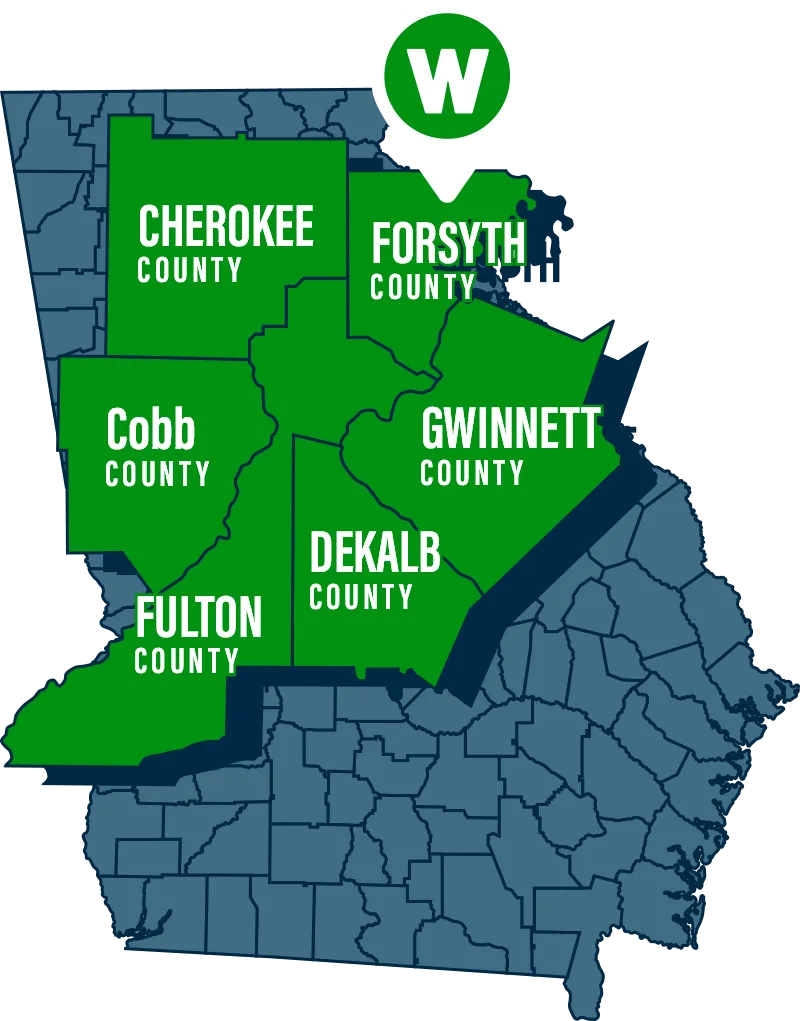
We’re a proud lawn care company serving communities throughout the Northern Atlanta Metropolitan area. We're proud to provide our professional lawn disease control services in the following cities and towns near you: